Wed 10 Jun 2009

Is it luck or skill that gets us to the goals and objectives we set for ourselves— gimmicks and software programs or practice and understanding? How many golfers are still using the putter they started with decades ago at a nine-hole cow pasture? How many of you are still bouncing between investment gurus and hedges in your search for the investment holy grail?
The best athletes come to the competition with sound fundamentals, well thought out objectives, and the discipline to hone their basic technique with countless hours of practice. The most successful investors come to the process with sound fundamentals, realistic goals and objectives, and a consistently applied discipline that embraces the cyclical nature of markets and economies.
Discipline is an ingredient in most long-term success recipes— business, sports, relationships, politics, veal scaloppini, etc. Well, maybe not politics. There are “fundamentals” involved in each.
Favorite foursome conversations provide clues to the particular fundamental that just failed you, as your duck-hooked tee shot comes to rest at the base of the dead pine tree, and possibly, just beyond the white stake. “Have you weakened your grip?” comments Larry. “Nah, he was lined up that way; went right where he aimed it,” Curley offers.
“Might have worked out just fine if he hadn’t picked his head up so soon,” spouts Moe. “What are you guys talking about? I was set up to fade the ball but I swung way too hard at the bottom and closed down the club face,” you bark as you tee up a provisional.
Grip, alignment, focus, target, and tempo— some major golf fundamentals.
Read (more…)
 Expectedly, after the resounding victory by the Congress Party in the general elections, markets skyrocketed as soon as the opening bell was sounded; eyeing a windfall in terms of government spending in a host of sectors to pump-prime the economy.
 A couple of days ago, I watched a short interview with the legendary investor Warren Buffett on an investment news channel. The interview was conducted shortly after the annual general meeting (AGM) of Buffett’s company Berkshire Hathaway. Buffet said many interesting things—as he always does—but the really educational part of the interview was the contrast between the world that Buffett inhabits and the world that his interviewer seemed to come from.
 Every correction is the same, a normal downturn in one or more of the markets where we invest. There has never been a correction that has not proven to be an investment opportunity. You can be confident that governments around the world are not going to allow another Great Depression “on their watch”.
 Risk is the probability of loss. It is best to estimate it and to adjust your purchase and sell strategies to it in order to control loss before the purchase is made. Correct timing of purchases, buying near support, limiting loss potential, and stopping the decline by using volatility stop losses are all ingredients of a good risk control system. Let’s look at a few of these loss control discipline components.
 The year 2008 has entered the record books for all of the wrong reasons; the Dow Jones had its worst year ever! So what about 2009, how will stock markets from around the world perform and which are the stocks to follow?
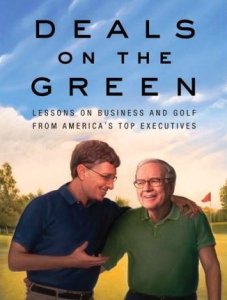 Golf is one of those games where business nearly equals pleasure. It’s the sport of choice for corporate czars and tycoons: Bill Gates has shanked and scuffed his way to billion-dollar deals on the golf course.